 EN
EN

Medical professionals performing spinal procedures and lumbar punctures must carefully select the appropriate needle type to ensure patient safety and procedural success. Two primary needle designs dominate the field: pencil point and Quincke puncture needles, each offering distinct advantages for different clinical scenarios. Understanding the fundamental differences between these needle types is crucial for healthcare providers who routinely perform cerebrospinal fluid collection, spinal anesthesia, and diagnostic procedures. The choice between pencil point and Quincke needle designs can significantly impact patient comfort, procedure duration, and the likelihood of post-procedural complications. This comprehensive analysis examines the technical specifications, clinical applications, and performance characteristics that distinguish these two essential medical instruments.
Needle Design Architecture and Engineering Principles
Pencil Point Needle Configuration
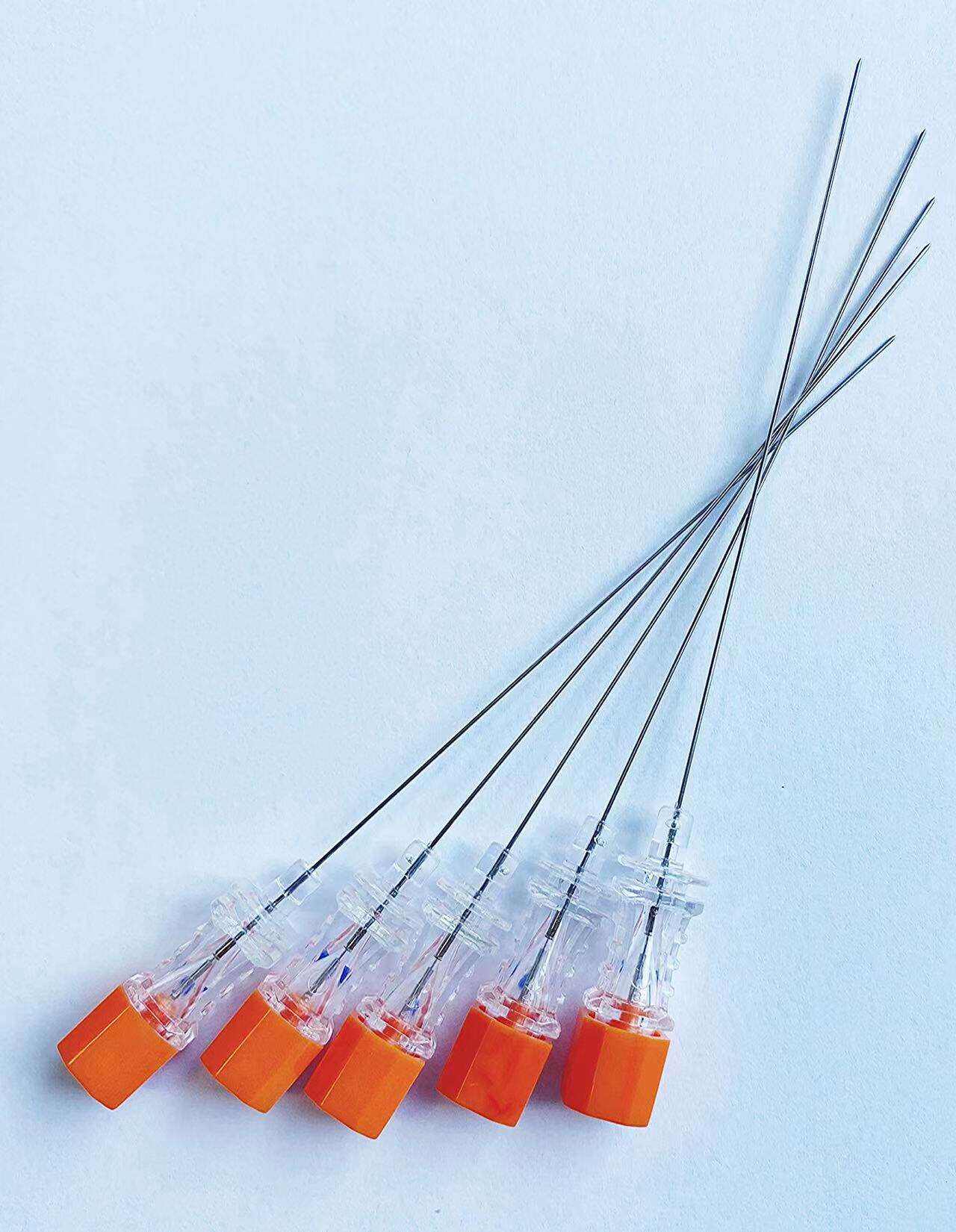
The pencil point needle features a distinctive rounded, conical tip that resembles the end of a sharpened pencil, hence its descriptive name. This innovative design incorporates a side port located approximately 2-4 millimeters from the needle tip, which serves as the primary pathway for fluid aspiration or injection. The blunt, atraumatic tip design allows the needle to separate tissue fibers rather than cutting through them, creating a more gentle approach to dural penetration. Manufacturing precision ensures that the side port maintains optimal dimensions for consistent flow rates while minimizing tissue damage during insertion. The pencil point configuration represents a significant advancement in needle technology, designed specifically to reduce the incidence of post-dural puncture headaches that commonly occur with traditional needle designs.
Advanced engineering techniques create a smooth transition from the needle shaft to the rounded tip, eliminating sharp edges that could potentially cause tissue trauma. The side port positioning is critical to the needle's performance, as it must be located beyond the dural membrane once proper placement is achieved. Quality control measures during manufacturing ensure consistent port dimensions and positioning across all needle sizes, maintaining predictable fluid flow characteristics regardless of gauge selection. The metallurgical properties of pencil point needles require specialized steel alloys that provide sufficient strength while maintaining the flexibility needed for precise placement during challenging procedures.
Quincke Needle Traditional Design Elements
Quincke needles feature a sharp, beveled cutting tip that has been the standard design for spinal procedures for many decades. The beveled edge creates a clean incision through tissue layers, including the dura mater, providing tactile feedback that many experienced practitioners prefer during needle advancement. The cutting tip design incorporates a precise angle, typically ranging from 12 to 20 degrees, which determines the needle's penetration characteristics and cutting efficiency. Traditional manufacturing processes ensure consistent bevel angles across production runs, maintaining predictable performance standards that practitioners have relied upon for generations. The sharp tip design enables rapid cerebrospinal fluid flow once proper placement is achieved, making Quincke needles particularly suitable for procedures requiring quick fluid collection or pressure measurement.
The beveled cutting surface creates a distinct sensation as it passes through different tissue layers, allowing experienced practitioners to identify anatomical landmarks through tactile feedback alone. This design characteristic proves particularly valuable in challenging cases where anatomical variation or patient positioning may complicate needle placement. The traditional Quincke configuration has undergone continuous refinement over decades of clinical use, with modern manufacturing techniques producing increasingly sharp and consistent cutting surfaces. Quality assurance protocols ensure that each needle meets strict specifications for tip geometry, cutting angle, and surface finish, maintaining the reliability that medical professionals expect from this established design.
Clinical Performance and Patient Impact
Post-Procedural Complication Rates
Research studies consistently demonstrate that pencil point needles produce significantly lower rates of post-dural puncture headaches compared to traditional Quincke designs. The atraumatic tip design of pencil point needles creates smaller dural defects that heal more rapidly, reducing cerebrospinal fluid leakage that typically causes these debilitating headaches. Clinical trials involving thousands of patients show headache incidence rates dropping from 10-30% with Quincke needles to 1-5% with pencil point alternatives. The reduced trauma associated with pencil point insertion also correlates with decreased requirements for blood patch procedures, which are sometimes necessary to seal persistent cerebrospinal fluid leaks. Healthcare institutions implementing pencil point needle protocols report substantial improvements in patient satisfaction scores and reduced post-procedural care requirements.
Long-term follow-up studies reveal that patients who receive procedures with pencil point needles experience faster recovery times and return to normal activities more quickly than those treated with traditional cutting needles. The reduced incidence of severe headaches translates directly into decreased hospital readmissions and emergency department visits for post-procedural complications. Insurance providers increasingly recognize the economic benefits of pencil point needle use, as the reduced complication rates result in lower overall healthcare costs despite potentially higher initial needle procurement expenses. Quality improvement initiatives in major medical centers consistently identify pencil point needle adoption as a key factor in enhancing patient safety and procedural outcomes.
Practitioner Experience and Learning Curves
Healthcare providers transitioning from Quincke to pencil point needles often require adjustment periods to accommodate the different tactile feedback and insertion techniques. The atraumatic tip design of pencil point needles provides less distinct sensation when passing through tissue layers, requiring practitioners to rely more heavily on depth measurements and anatomical landmarks. Experienced physicians who have performed hundreds of procedures with Quincke needles may initially find the reduced tactile feedback challenging, particularly in cases involving difficult anatomical access. Training programs increasingly emphasize the importance of proper technique modification when switching between needle types, as insertion angles and advancement speeds may require adjustment. The learning curve for puncture needles varies among practitioners, with most achieving proficiency within 10-20 procedures using the new design.
Residency training programs now incorporate specific modules addressing both needle types, ensuring that emerging practitioners develop competency with both traditional and modern designs. Simulation-based training platforms allow practitioners to experience the differences between needle types in controlled environments before treating actual patients. Continuing medical education courses emphasize the importance of understanding when each needle type may be most appropriate, as certain clinical scenarios may favor one design over another. Professional societies increasingly recommend that practitioners maintain proficiency with both needle types to ensure optimal patient care across diverse clinical situations and institutional preferences.
Technical Specifications and Performance Metrics
Flow Rate Characteristics and Fluid Dynamics
The internal diameter and flow characteristics of puncture needles significantly impact procedure duration and sample quality during cerebrospinal fluid collection. Pencil point needles typically demonstrate slightly reduced initial flow rates compared to Quincke designs due to the side port configuration, which creates additional fluid path complexity. However, once steady flow is established, pencil point needles maintain consistent flow rates that often exceed those of Quincke needles throughout the procedure duration. The side port design prevents complete occlusion of the needle opening by tissue or debris, ensuring more reliable fluid collection even in challenging anatomical situations. Laboratory testing reveals that pencil point needles maintain laminar flow characteristics that reduce cellular damage and preserve specimen integrity for diagnostic analysis.
Computational fluid dynamics modeling demonstrates that the side port configuration in pencil point needles creates more predictable pressure-flow relationships compared to the end-opening design of Quincke needles. The rounded tip design eliminates the potential for tissue plugging that occasionally occurs with sharp-tipped needles, particularly in patients with thickened or scarred dural membranes. Quality control testing protocols measure flow rates across multiple pressure differentials to ensure consistent performance characteristics within specified tolerance ranges. Manufacturing variations in port dimensions can significantly impact flow performance, requiring precise machining tolerances and rigorous quality assurance protocols.
Gauge Selection and Size Considerations
Both pencil point and Quincke needle designs are available in multiple gauge sizes, ranging from 18-gauge for rapid fluid collection to 27-gauge for minimal trauma applications. Smaller gauge pencil point needles require longer procedure times due to reduced flow rates but offer superior patient comfort and reduced complication rates. The relationship between needle gauge and post-procedural complications follows a predictable pattern, with smaller gauges consistently producing lower headache incidence rates regardless of tip design. Practitioners must balance the benefits of smaller gauge needles against the practical considerations of procedure duration and fluid collection requirements. The mechanical properties of different gauge needles also influence insertion characteristics, with larger gauges providing better directional control but increased tissue trauma.
Pediatric applications often favor smaller gauge pencil point needles due to the enhanced safety profile and reduced risk of complications in younger patients. Geriatric populations may benefit from the atraumatic design characteristics of pencil point needles, as age-related changes in dural membrane properties can increase complication risks with traditional cutting needles. The selection criteria for needle gauge and tip design should consider patient factors, procedural requirements, and institutional protocols to optimize outcomes. Recent innovations in needle manufacturing have produced ultra-thin wall designs that maximize internal diameter while minimizing external dimensions, improving flow characteristics without increasing tissue trauma.
Economic and Institutional Considerations
Cost-Effectiveness Analysis
Healthcare institutions evaluating needle selection must consider both initial procurement costs and long-term economic implications of their choices. Pencil point needles typically cost 20-40% more than traditional Quincke needles at the point of purchase, creating initial budget pressure for cost-conscious healthcare systems. However, comprehensive economic analyses consistently demonstrate that the reduced complication rates associated with pencil point needles generate substantial cost savings through decreased post-procedural care requirements. The elimination of blood patch procedures alone can offset the increased needle costs, as these interventions require additional physician time, facility resources, and patient care hours. Insurance reimbursement patterns increasingly favor institutions that demonstrate lower complication rates, creating financial incentives for adopting superior needle technologies.
Risk management departments recognize that post-dural puncture headaches represent significant liability exposure, as these complications can result in extended hospital stays and potential legal action. The documented safety improvements associated with pencil point needles provide measurable risk reduction that translates into lower malpractice insurance premiums and reduced legal exposure. Quality improvement initiatives that incorporate pencil point needle adoption often achieve rapid return on investment through improved patient satisfaction scores and reduced readmission rates. Long-term financial modeling demonstrates that institutions using pencil point needles exclusively experience 15-25% lower total costs per procedure when all factors are considered comprehensively.
Supply Chain and Inventory Management
Healthcare supply chain managers must balance the complexity of maintaining multiple needle types against the clinical benefits of having both options available. Standardization efforts often favor single needle type adoption to simplify inventory management and reduce staff training requirements. However, certain clinical scenarios may specifically benefit from particular needle designs, creating pressure to maintain diverse inventory options. The shelf life and storage requirements for both needle types are essentially identical, minimizing additional inventory management complexity. Bulk purchasing agreements with manufacturers can help offset the higher costs of pencil point needles while ensuring consistent supply availability.
Just-in-time inventory systems must account for usage patterns and procedural volumes to prevent stockouts of either needle type. Emergency department and labor and delivery units may require rapid access to both needle types, necessitating strategic stock placement throughout healthcare facilities. Vendor partnerships often include training support and clinical education resources that help justify the increased costs associated with advanced needle technologies. Supply chain resilience planning should consider alternative suppliers for both needle types to ensure continuity of care during potential disruption events.
FAQ
Which needle type is better for beginners learning spinal procedures
Pencil point needles are generally recommended for practitioners learning spinal procedures due to their enhanced safety profile and reduced complication rates. The atraumatic tip design provides more forgiving insertion characteristics, allowing beginners to develop proper technique while minimizing patient risk. Although the tactile feedback differs from traditional needles, the reduced likelihood of causing post-dural puncture headaches makes pencil point needles ideal for building confidence during the learning process. Most training programs now emphasize pencil point needle techniques as the primary approach, with Quincke needle familiarity developed as a secondary skill set.
Can pencil point and Quincke needles be used interchangeably in all procedures
While both needle types can accomplish most spinal procedures, certain clinical situations may favor one design over another. Pencil point needles excel in routine diagnostic lumbar punctures and therapeutic procedures where patient comfort is paramount. Quincke needles may be preferred in emergency situations requiring rapid cerebrospinal fluid collection or when practitioners need maximum tactile feedback for challenging anatomical access. The choice often depends on practitioner experience, institutional protocols, and specific patient factors such as age, anatomy, and medical history.
Do insurance companies prefer one needle type over another
Insurance providers increasingly recognize the value proposition of pencil point needles due to their documented reduction in post-procedural complications and associated healthcare costs. Many insurers now provide preferential reimbursement rates for institutions that demonstrate lower complication rates, indirectly encouraging pencil point needle adoption. Quality-based payment models specifically reward healthcare providers who achieve superior patient outcomes, making the safety advantages of pencil point needles financially beneficial. The long-term cost savings from reduced complications often outweigh the higher initial needle costs from an insurance perspective.
How long does it take to transition from Quincke to pencil point needles
Most experienced practitioners require 10-20 procedures to become fully proficient with pencil point needles after transitioning from Quincke designs. The adjustment period primarily involves adapting to different tactile feedback and learning to rely more heavily on anatomical landmarks and depth measurements. Simulation training and mentored procedures can accelerate the learning process and build confidence before treating patients independently. Healthcare institutions typically implement transition programs that include structured training, competency assessments, and ongoing support to ensure successful adoption of new needle technologies.